|
The
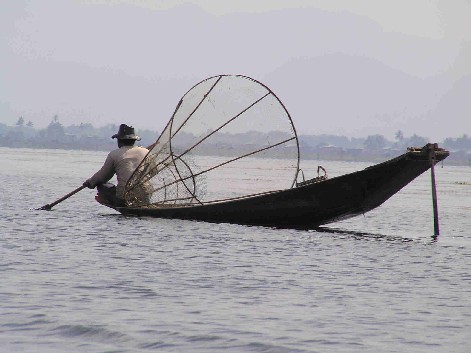
origin of the technique is uncertain, but it is believed that the
practice began in the 12th century to enable the fishermen to navigate
their flat-bottom wooden boats above the floating gardens. Standing up
on one leg in the narrow stern of the boat, a fisherman wraps his other
leg around an oar and, with a circular movement, propels his boat
forward. This "leg rowing" gives him a better view of the
waterways and makes it easier to navigate around the floating islands
and water hyacinth which make the margins of the lake into a maze of
passageways. It also frees his hands for managing his fish trap.
From a standing position they are able to see the fish and avoid the patches of water hyacinth. The tall conical trap is thrust into the lake when fish are spotted. A ring holding the net is released sending it billowing down. If they are lucky they may catch carp, catfish, eel or snails. This method of fishing, like the leg rowing and a large number of the fish and snails they catch, are unique to Inle Lake.
|
||
| Early morning start. | Poised to fish. | Taking the catch home |
Last changed: Saturday October 18, 2014
|
||